001 / 000
Meat Portraits, 2014
All rights reserved © Alex Van Gelder 2026

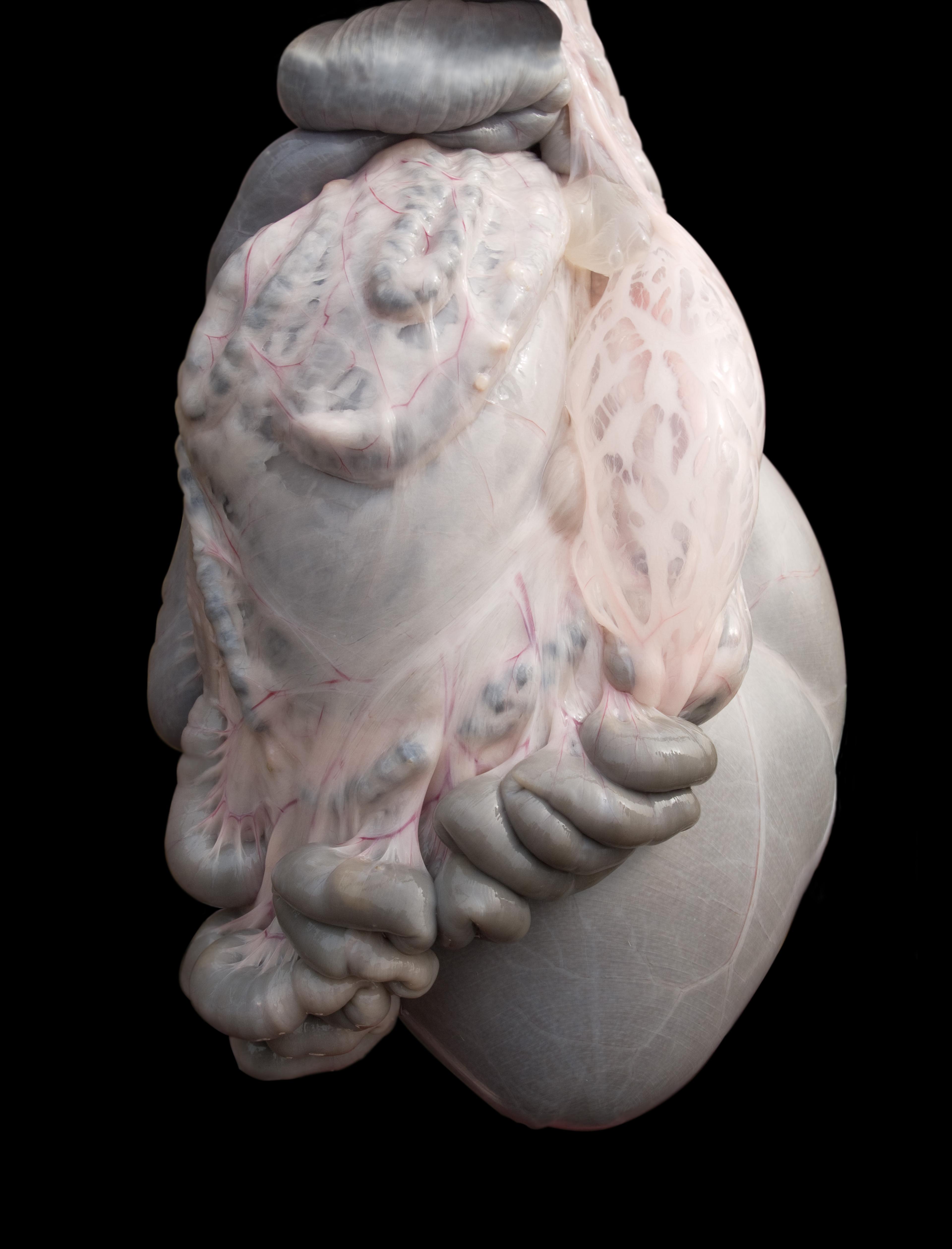
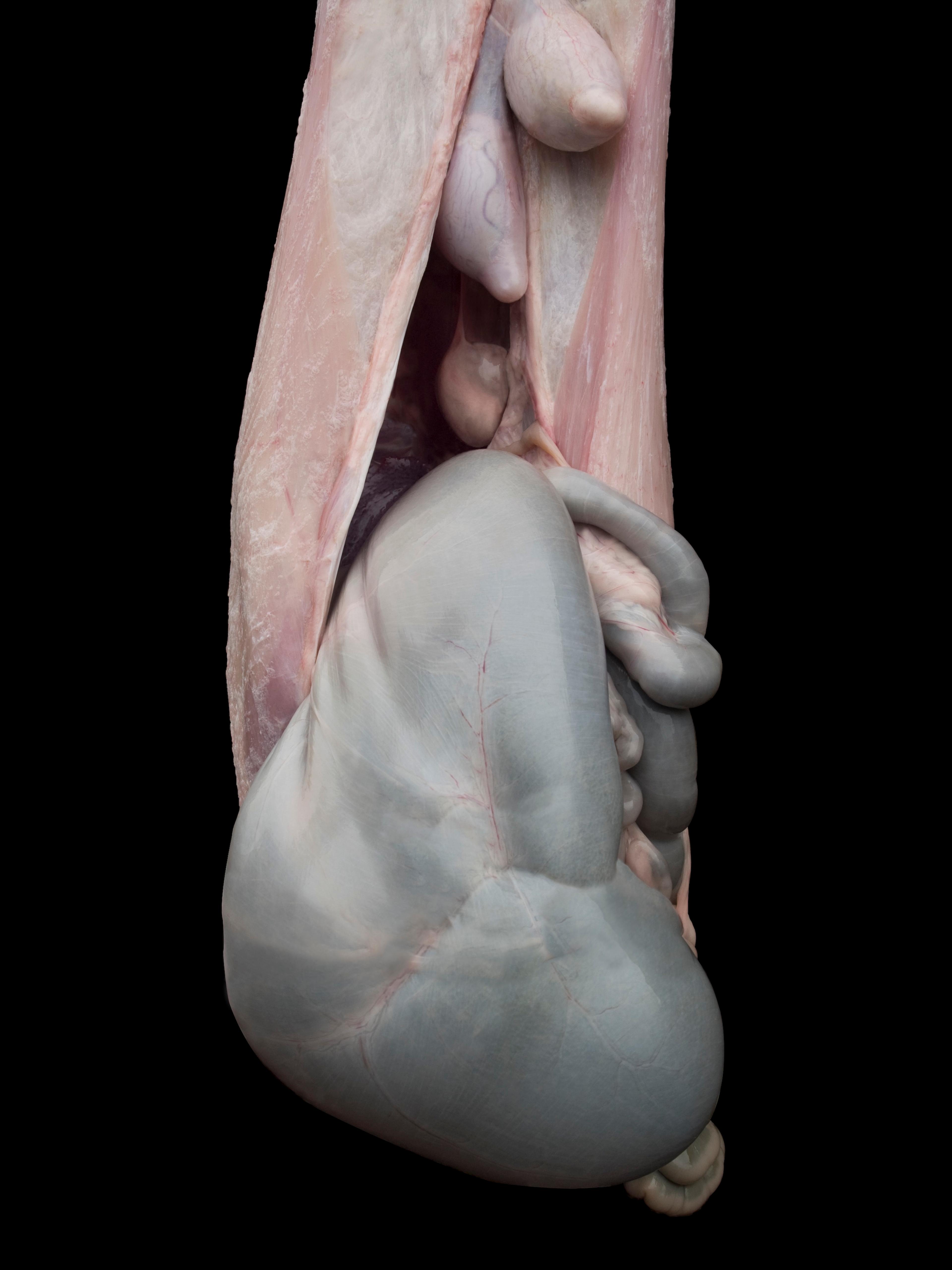
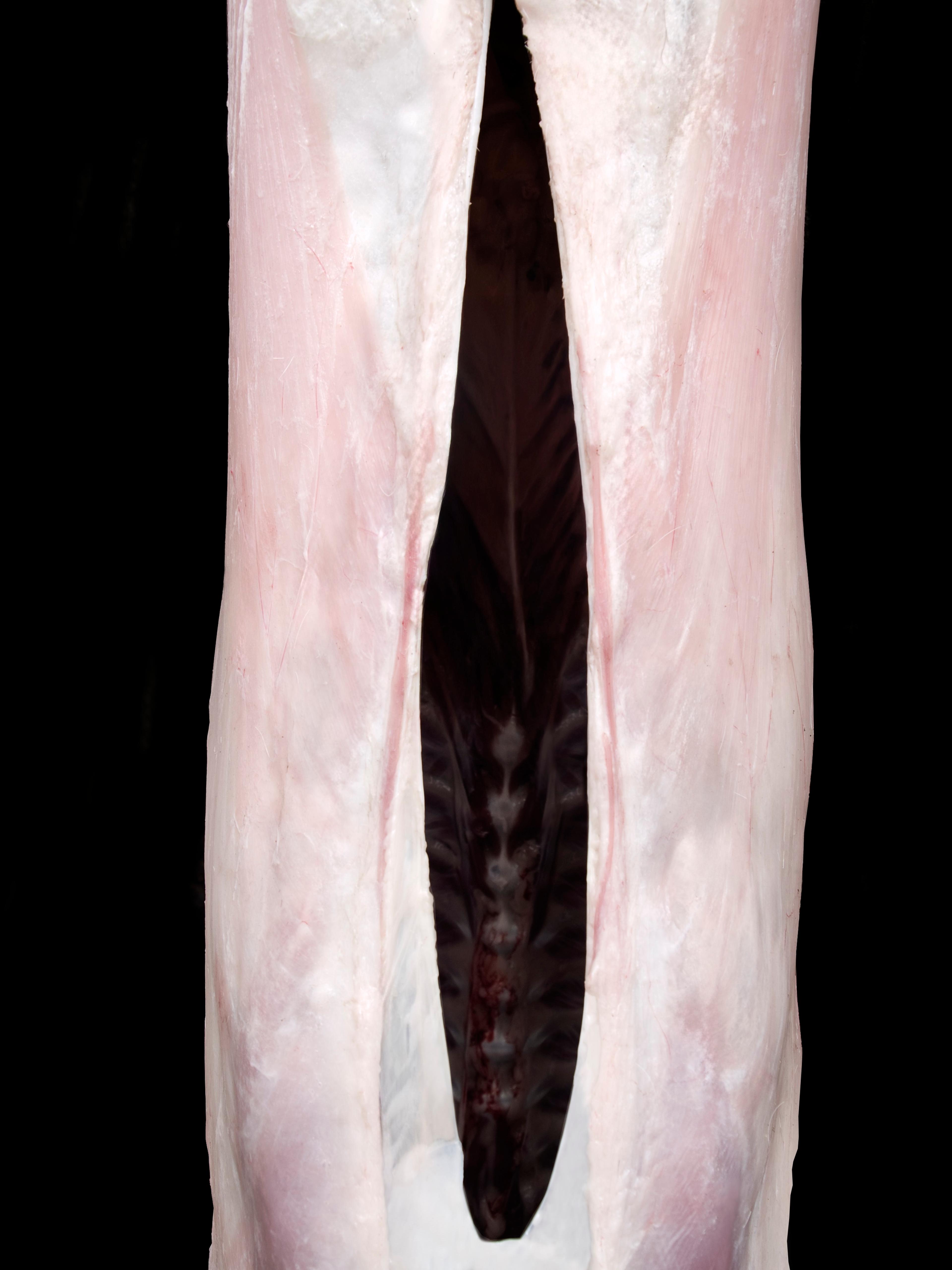
Meat Portraits, 2014
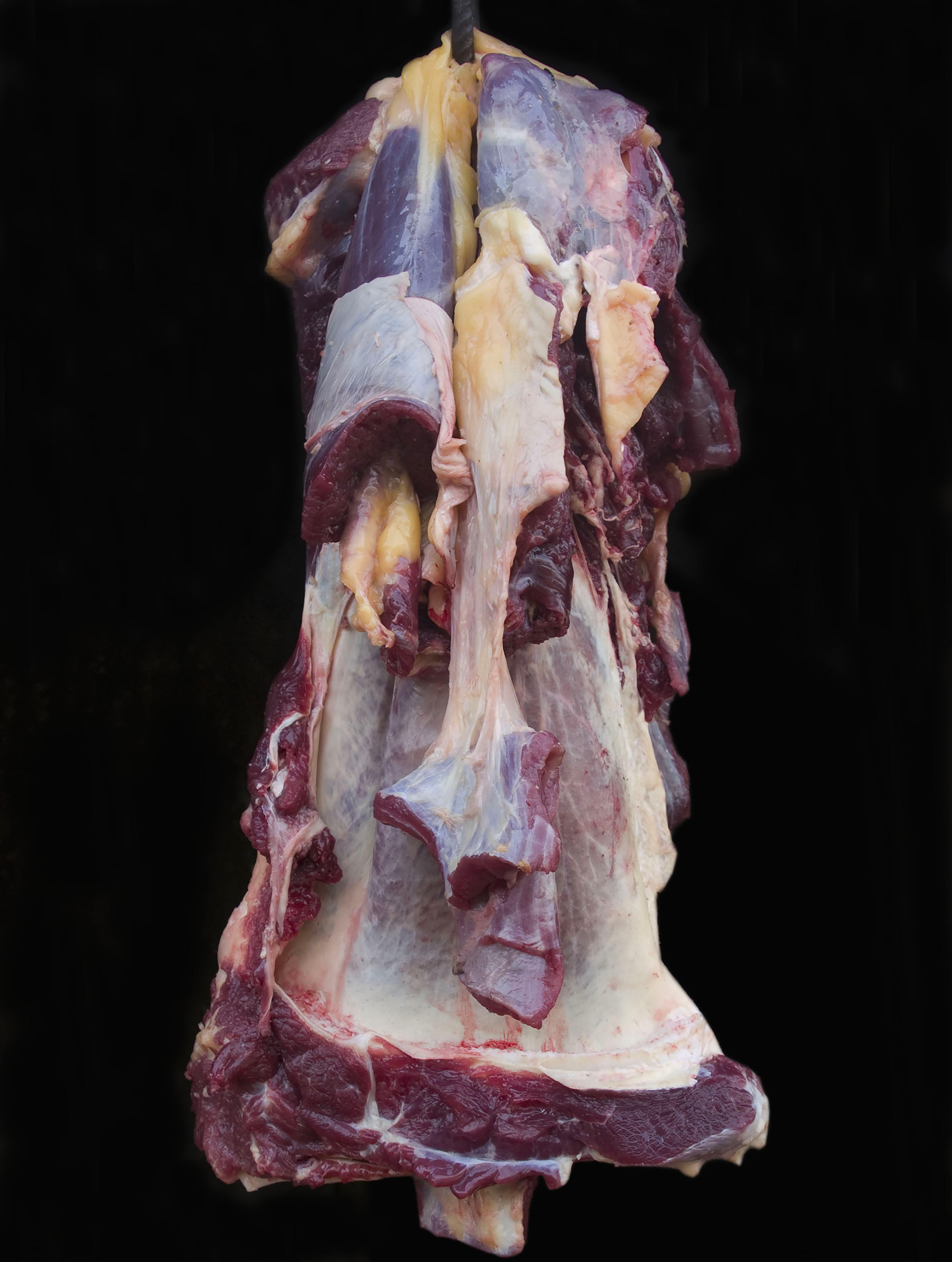
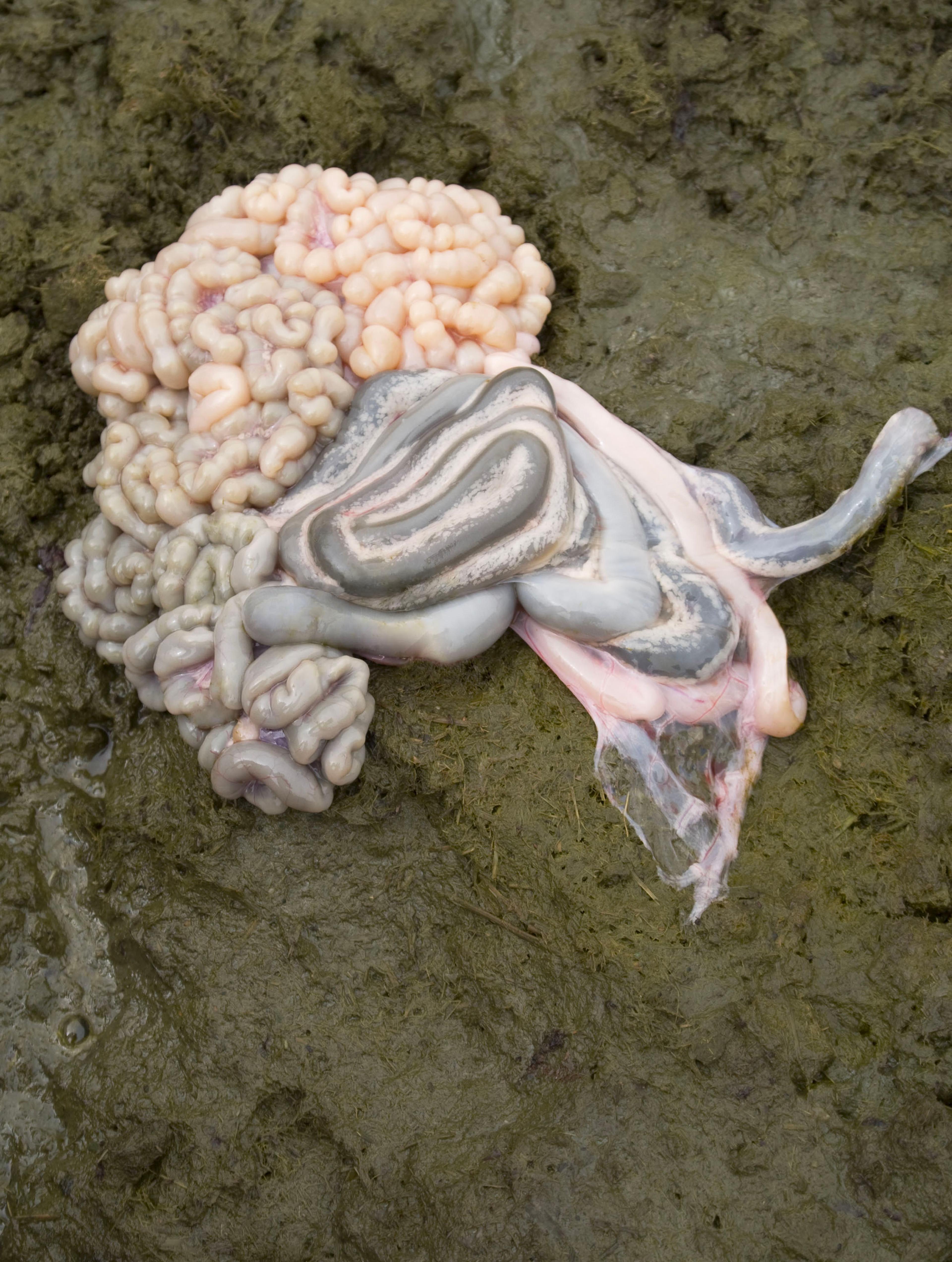
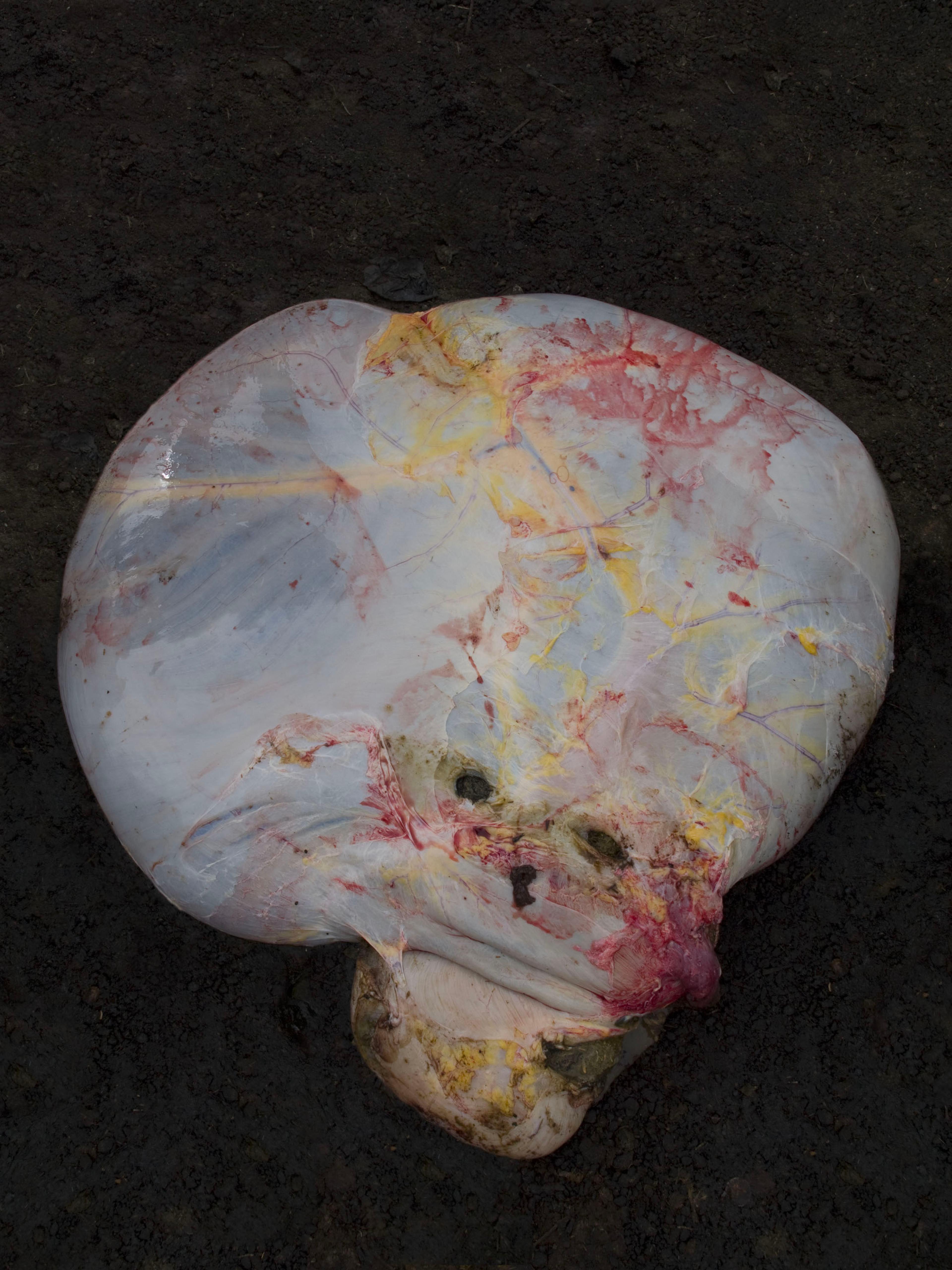
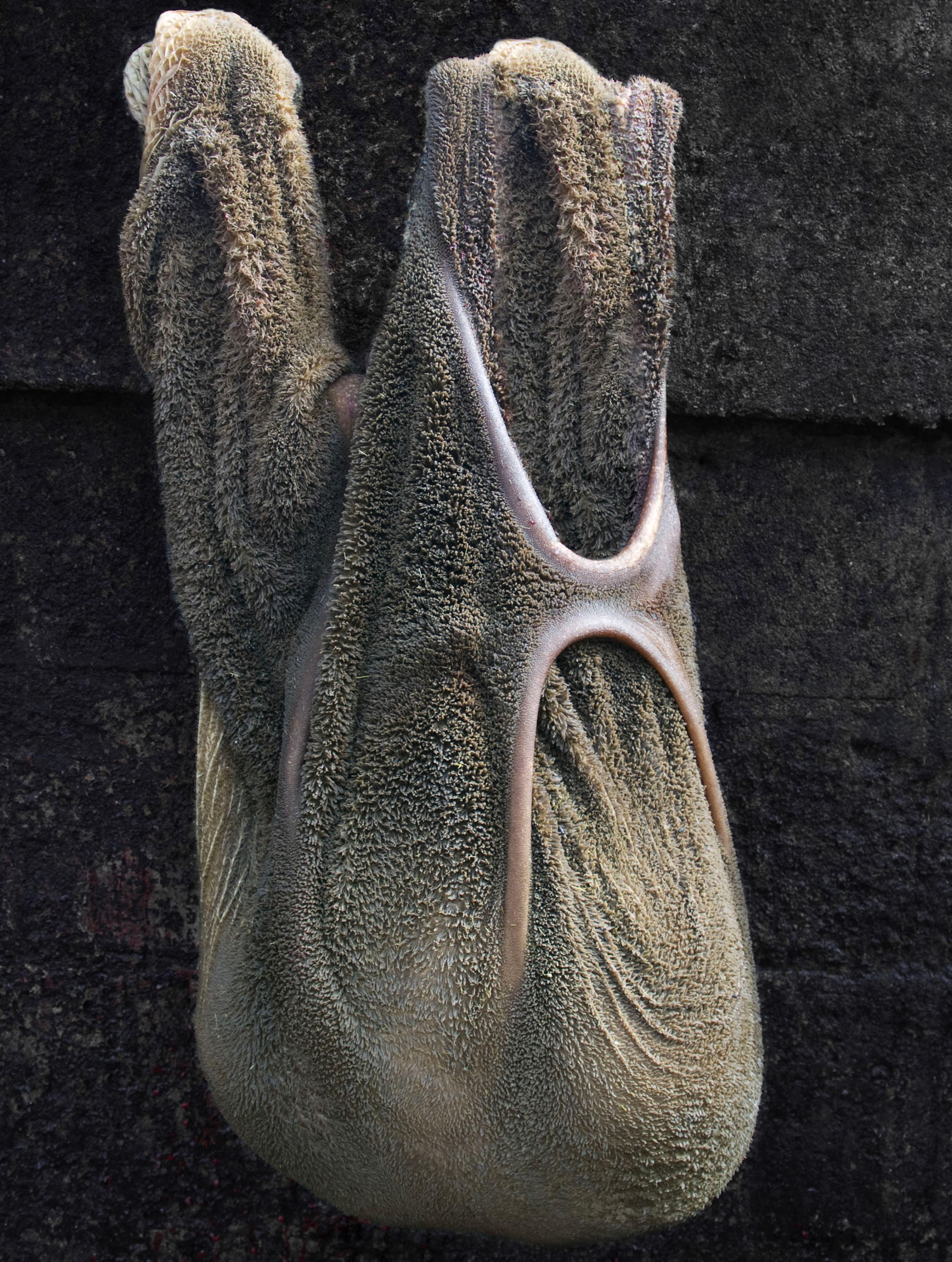
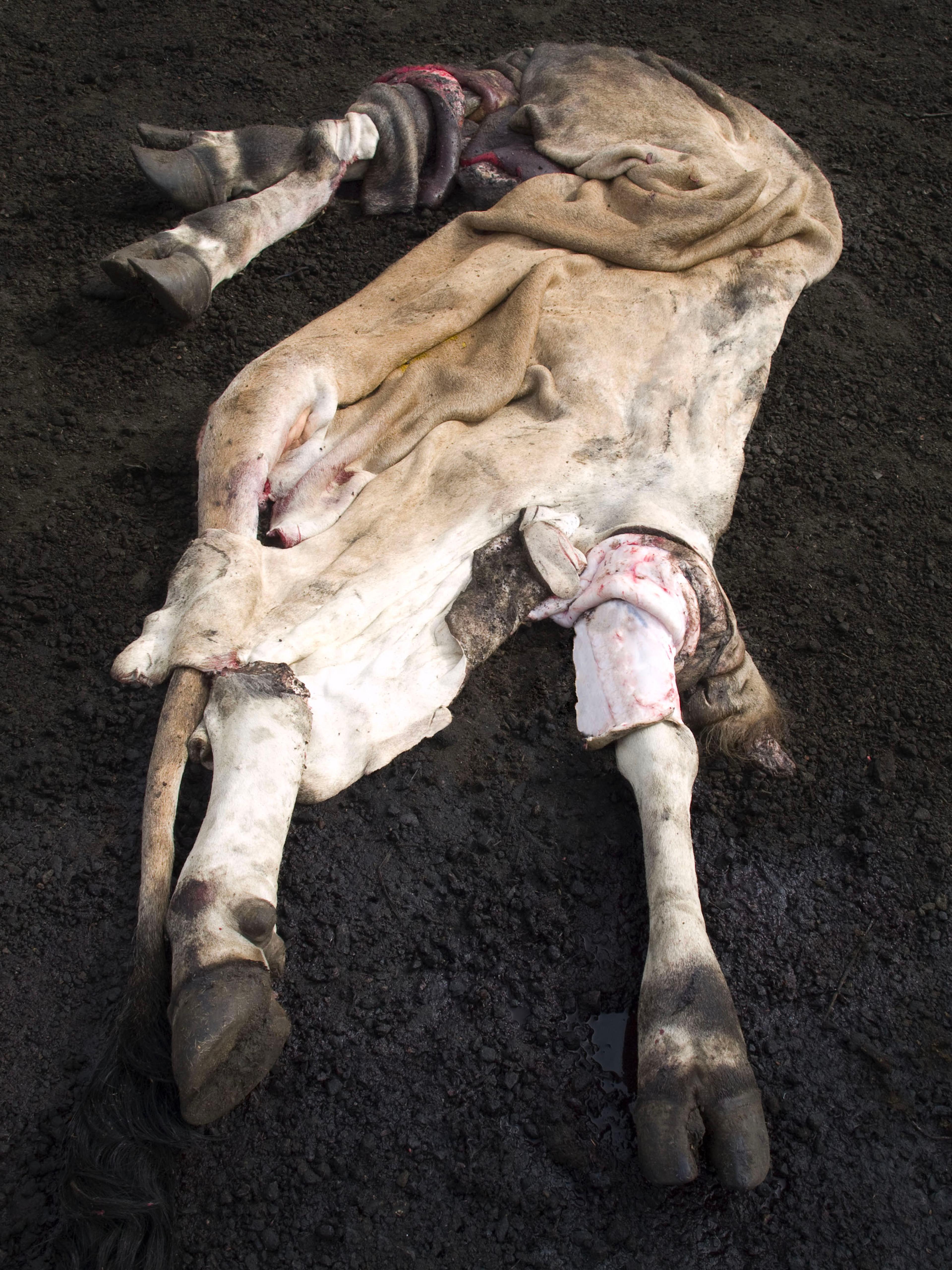
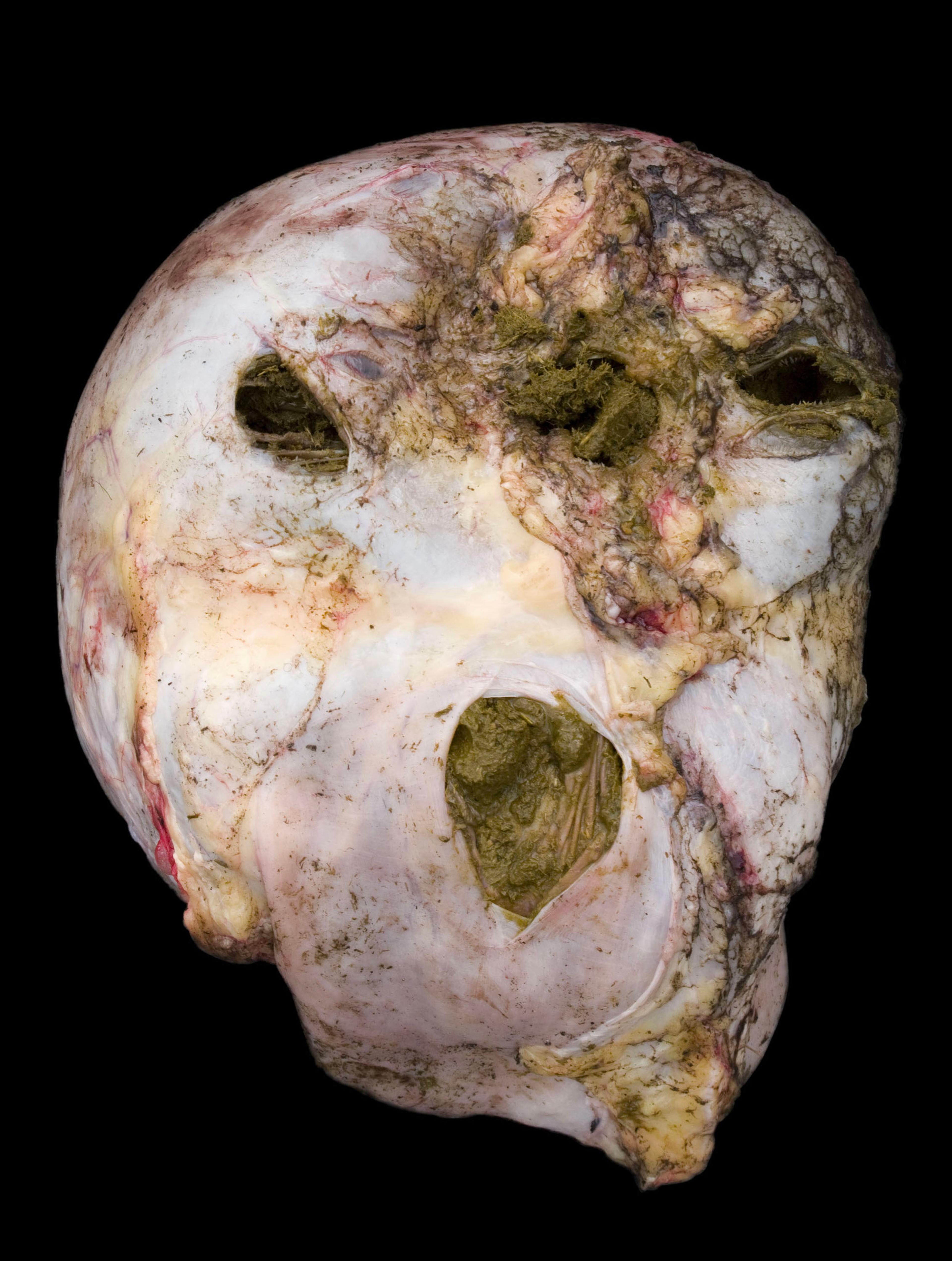
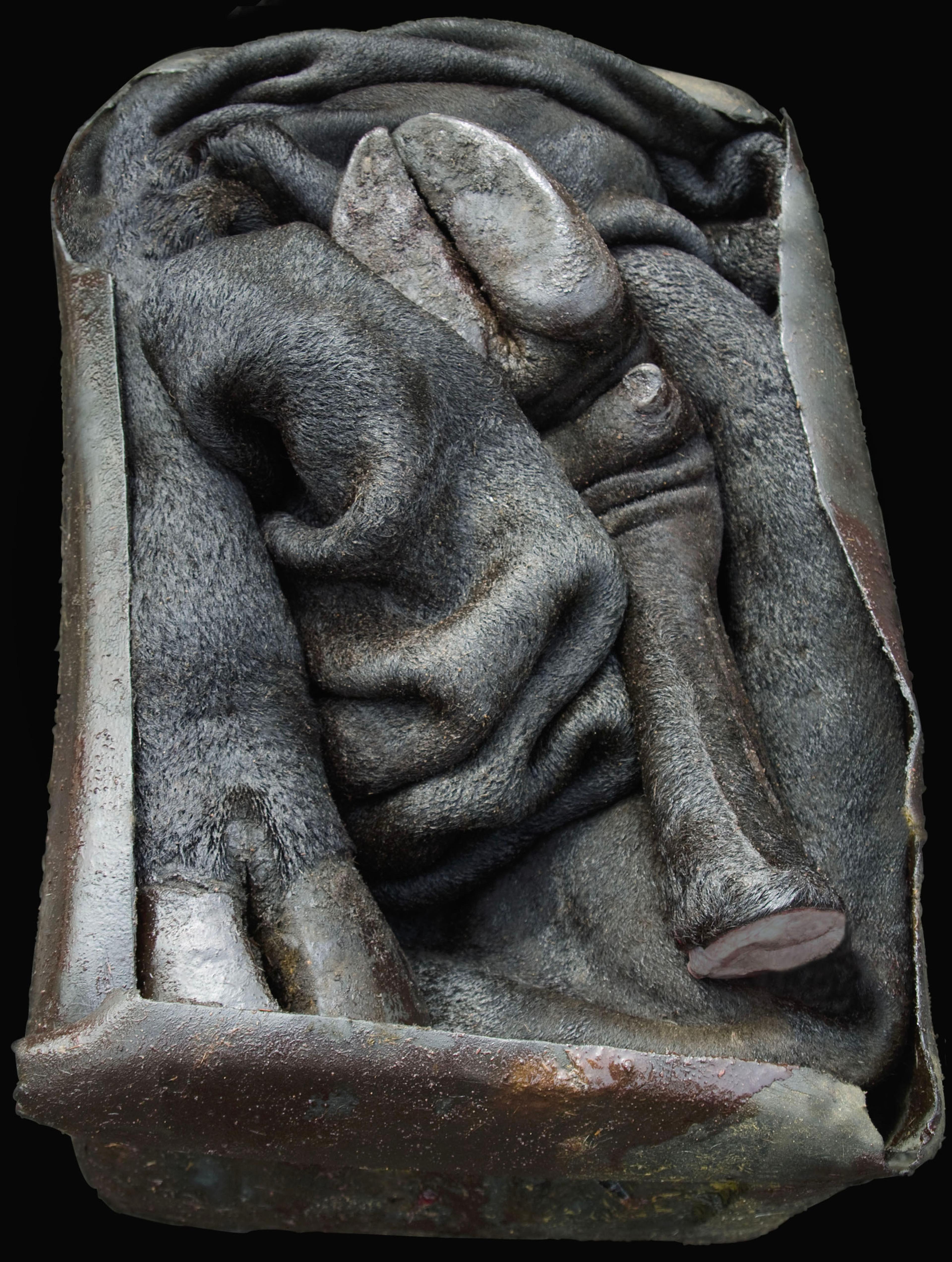
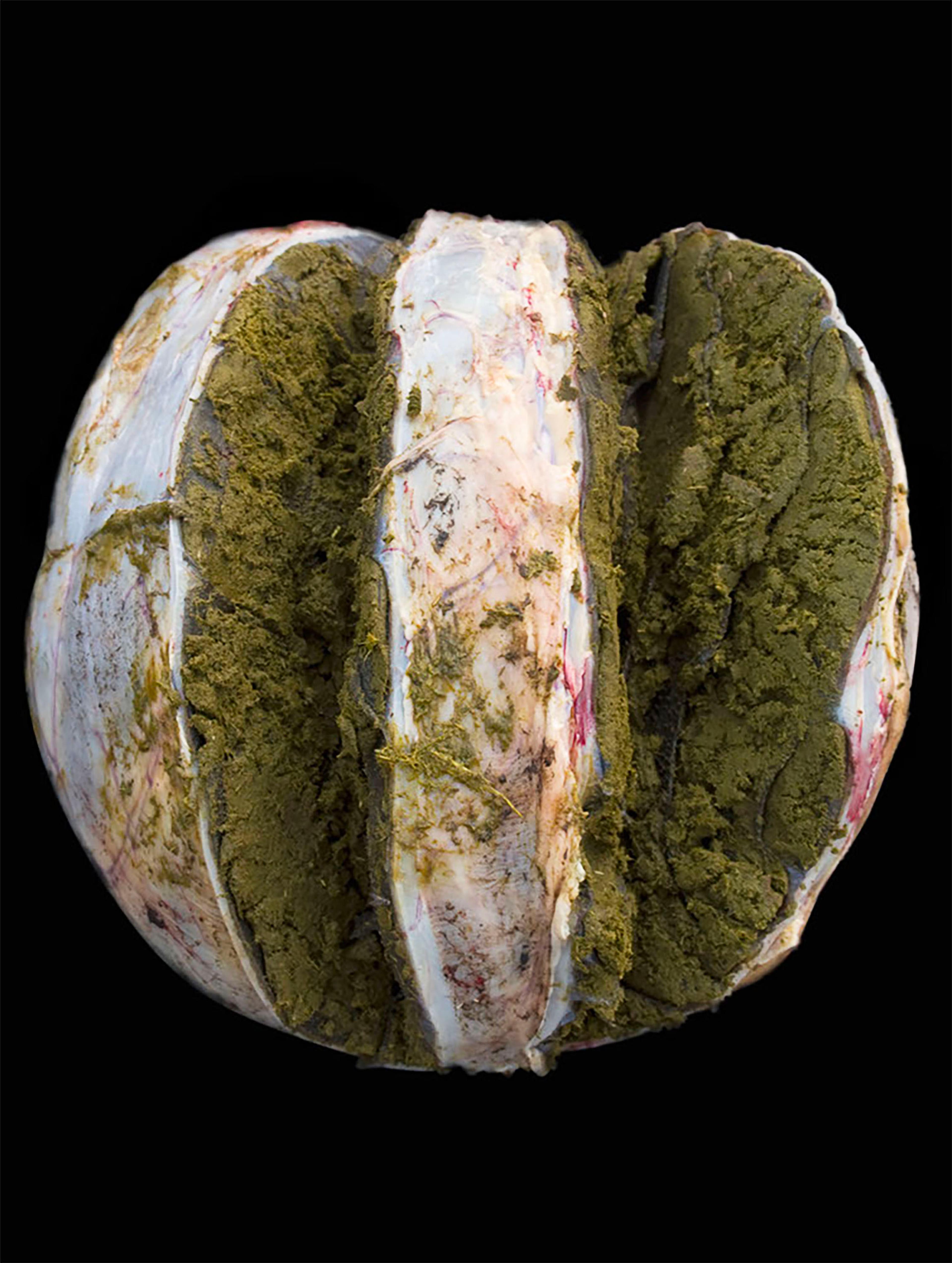
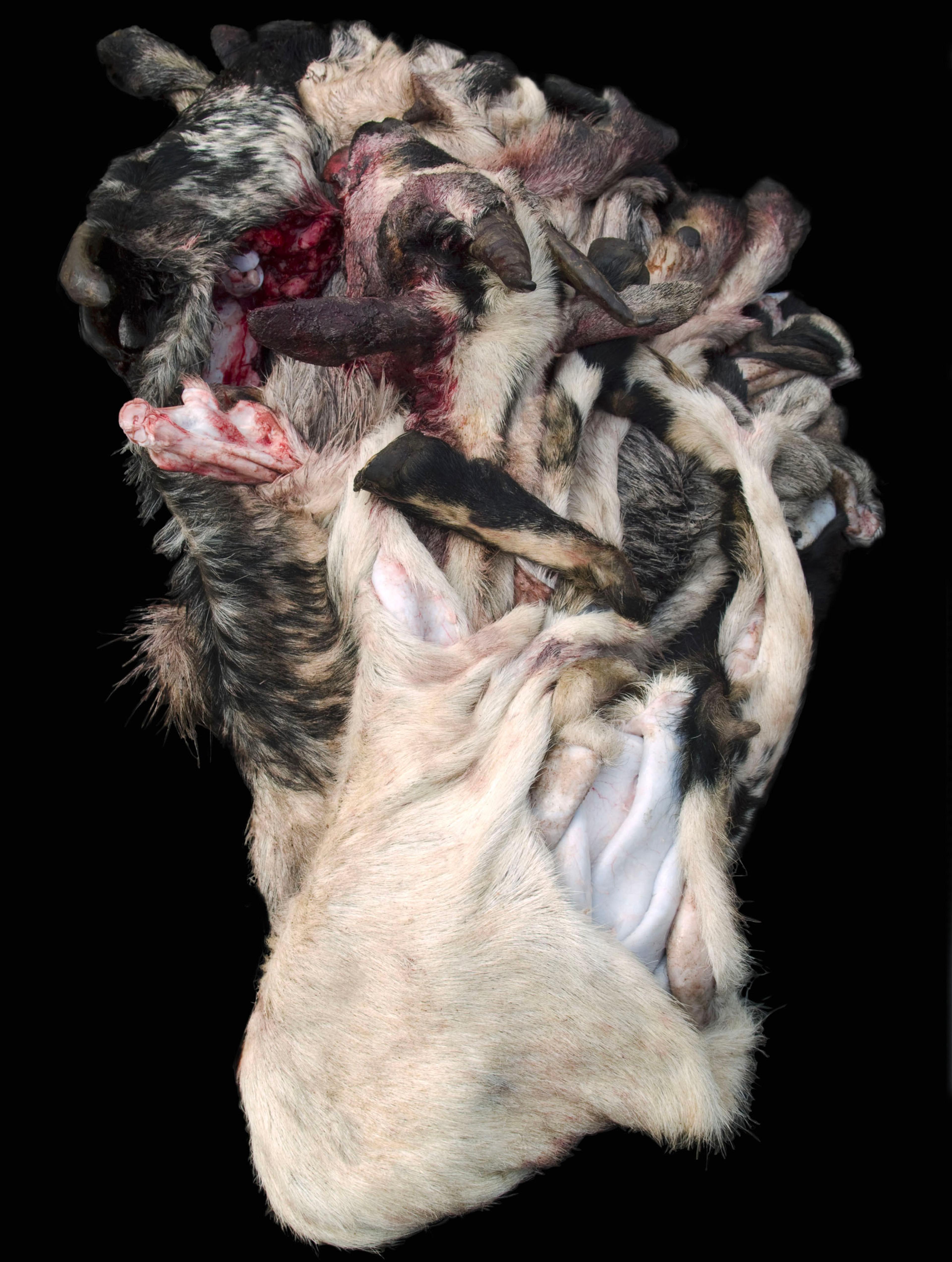
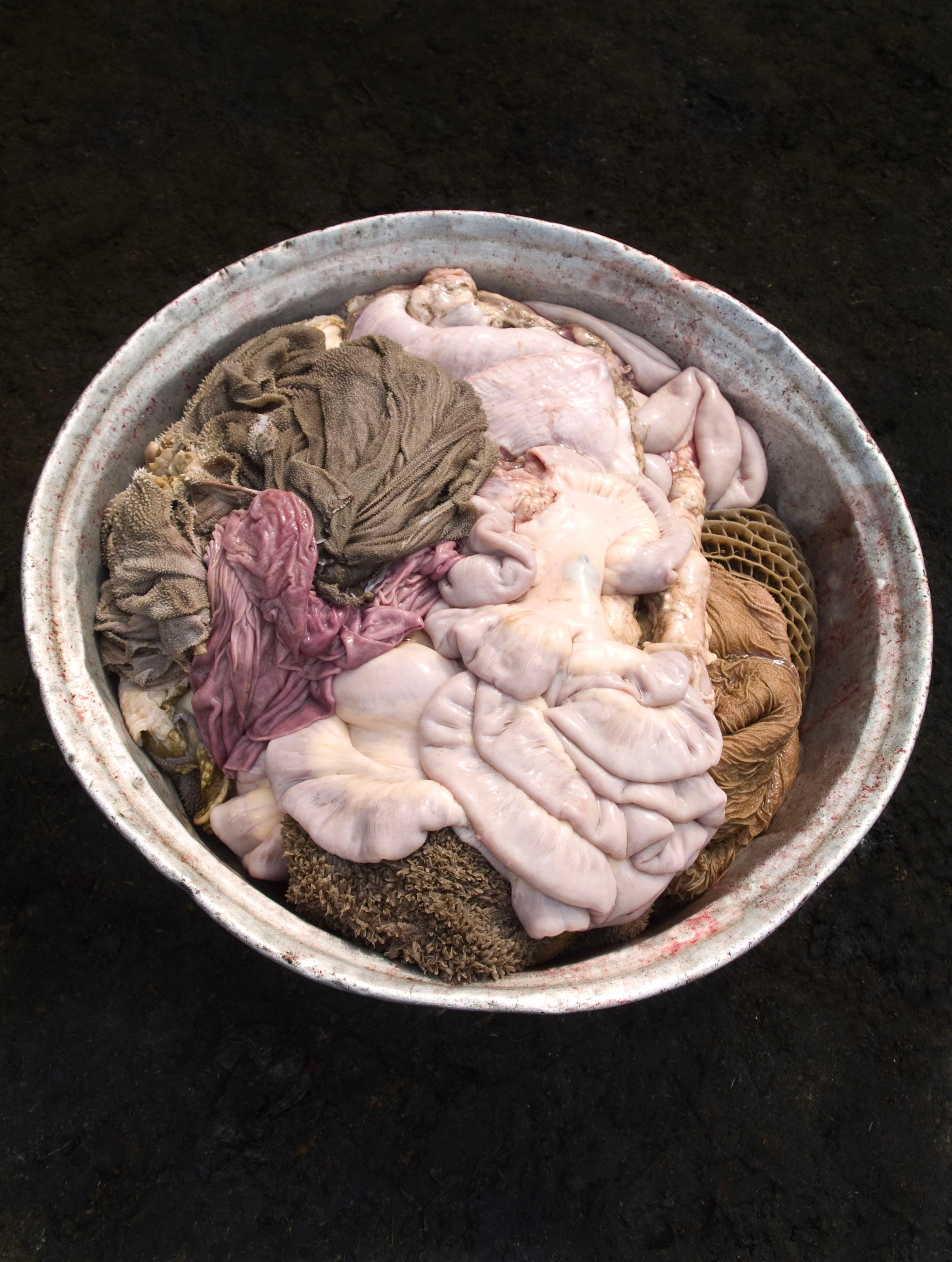
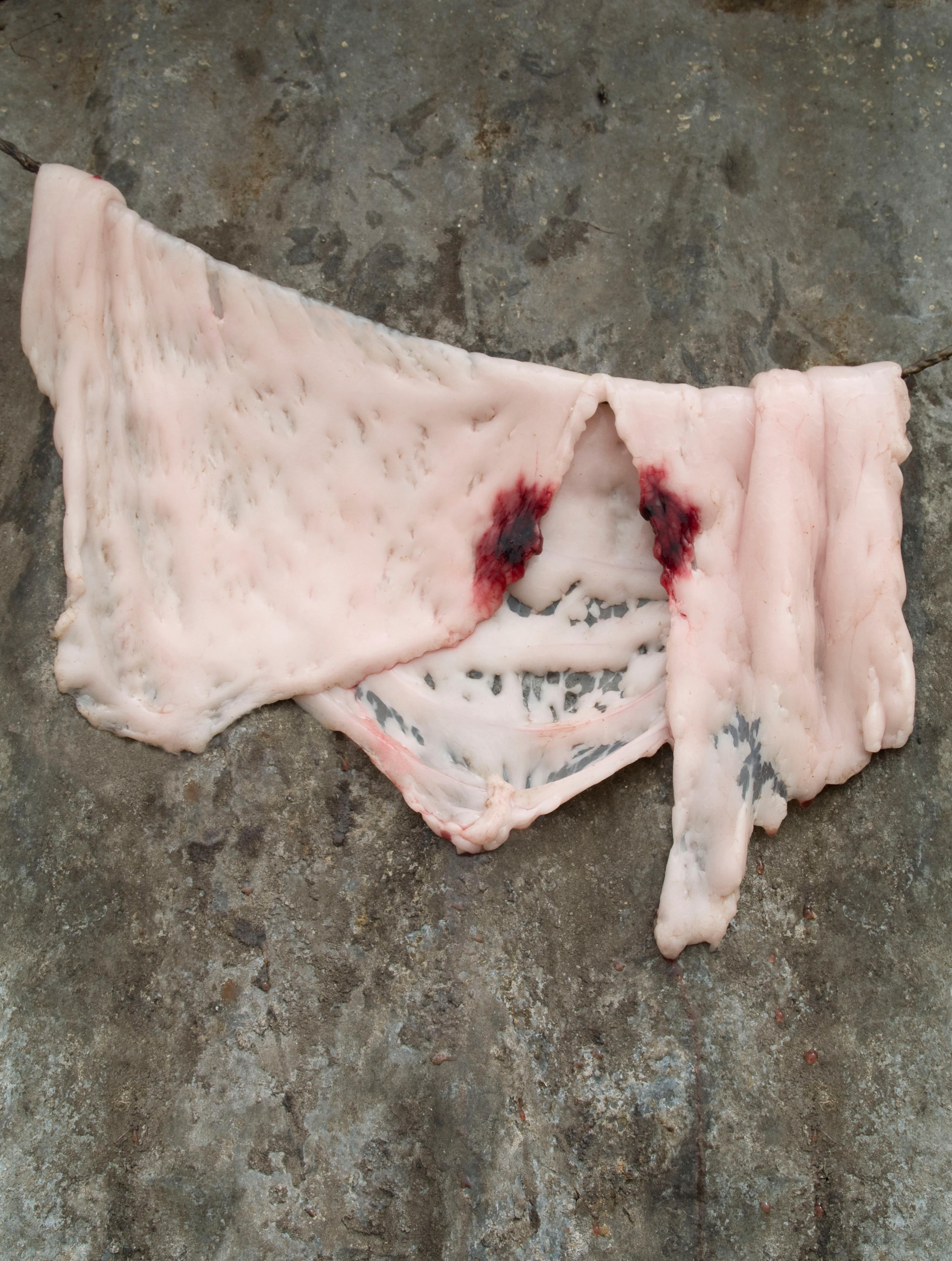
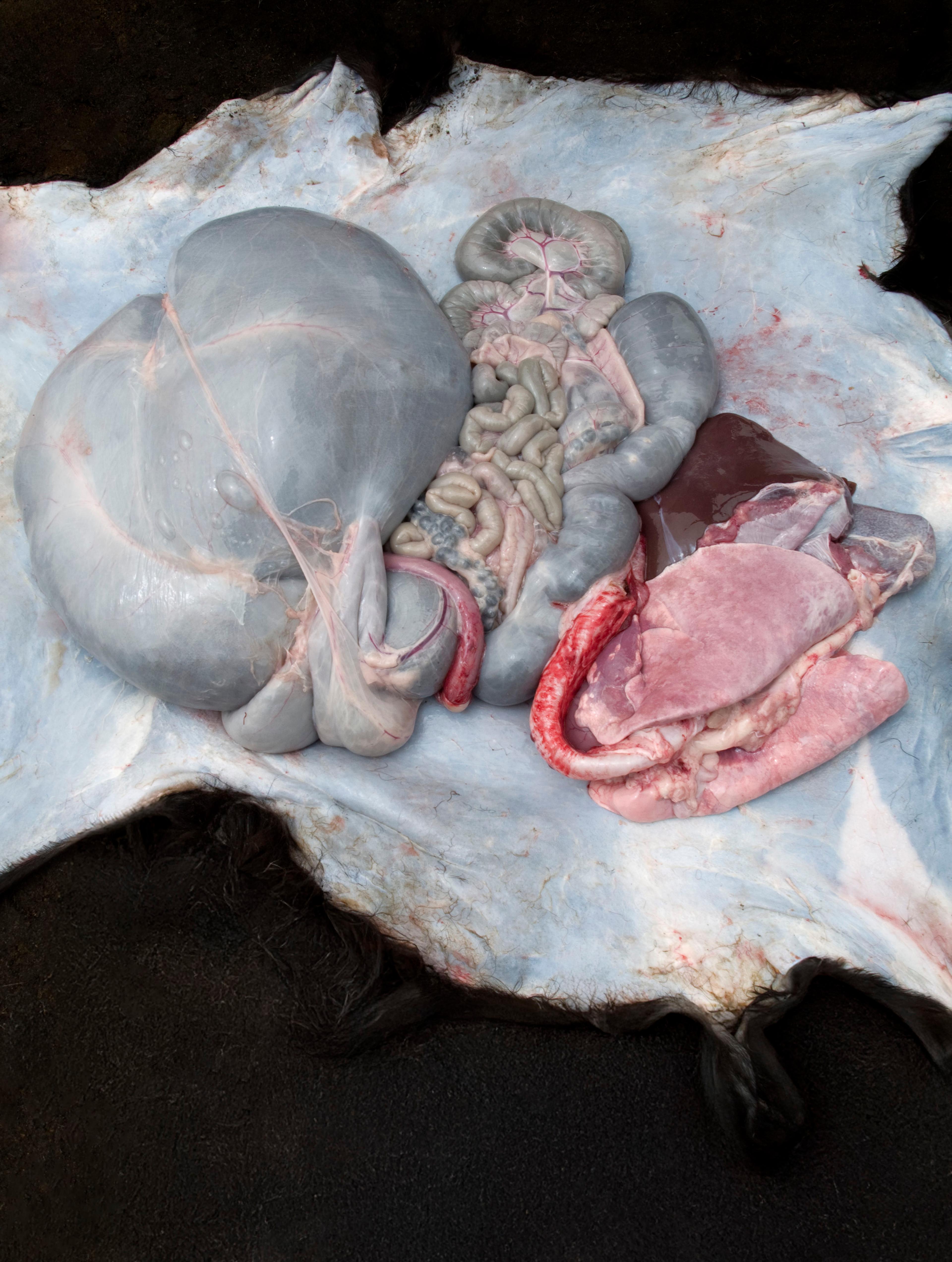
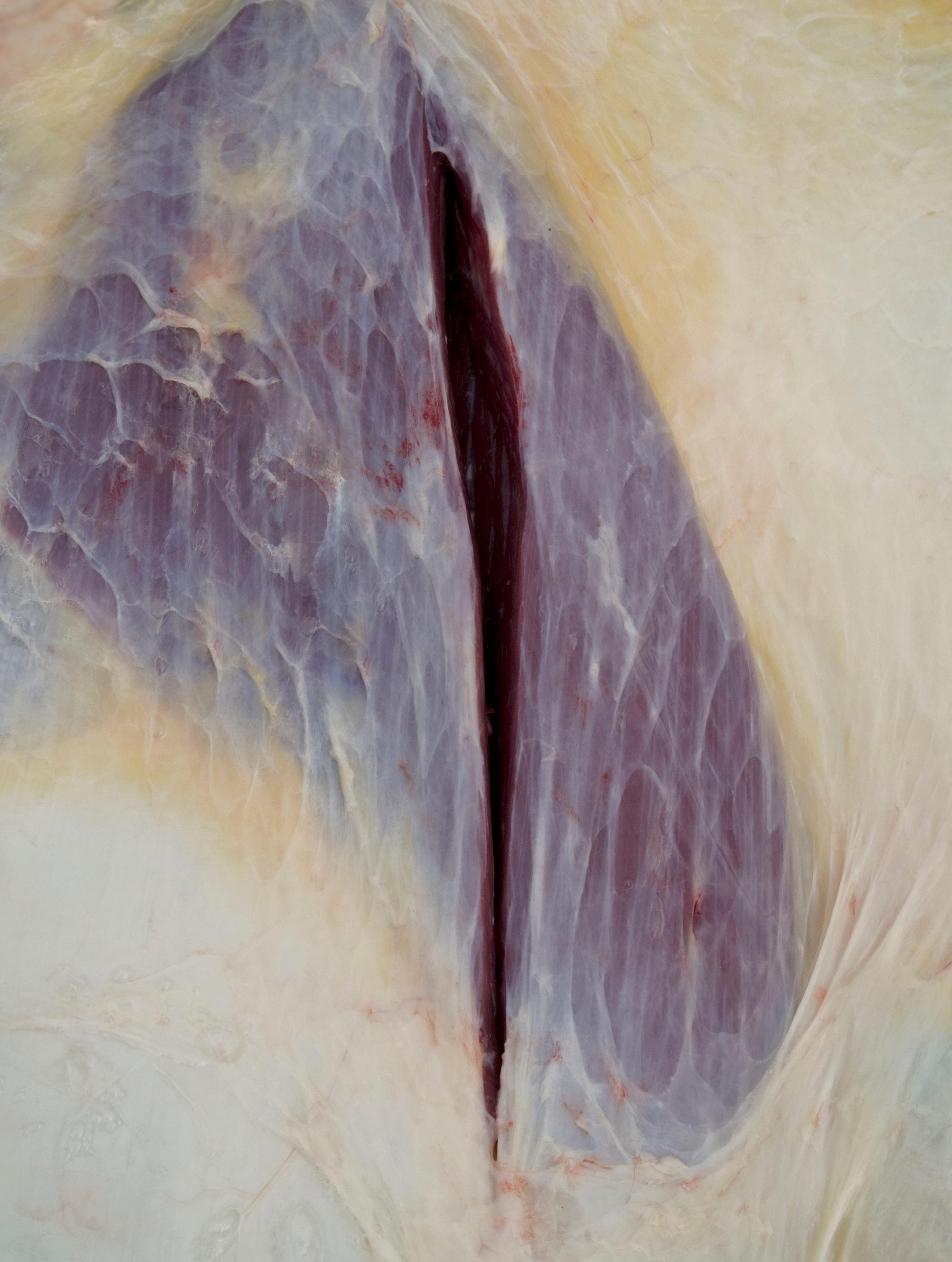
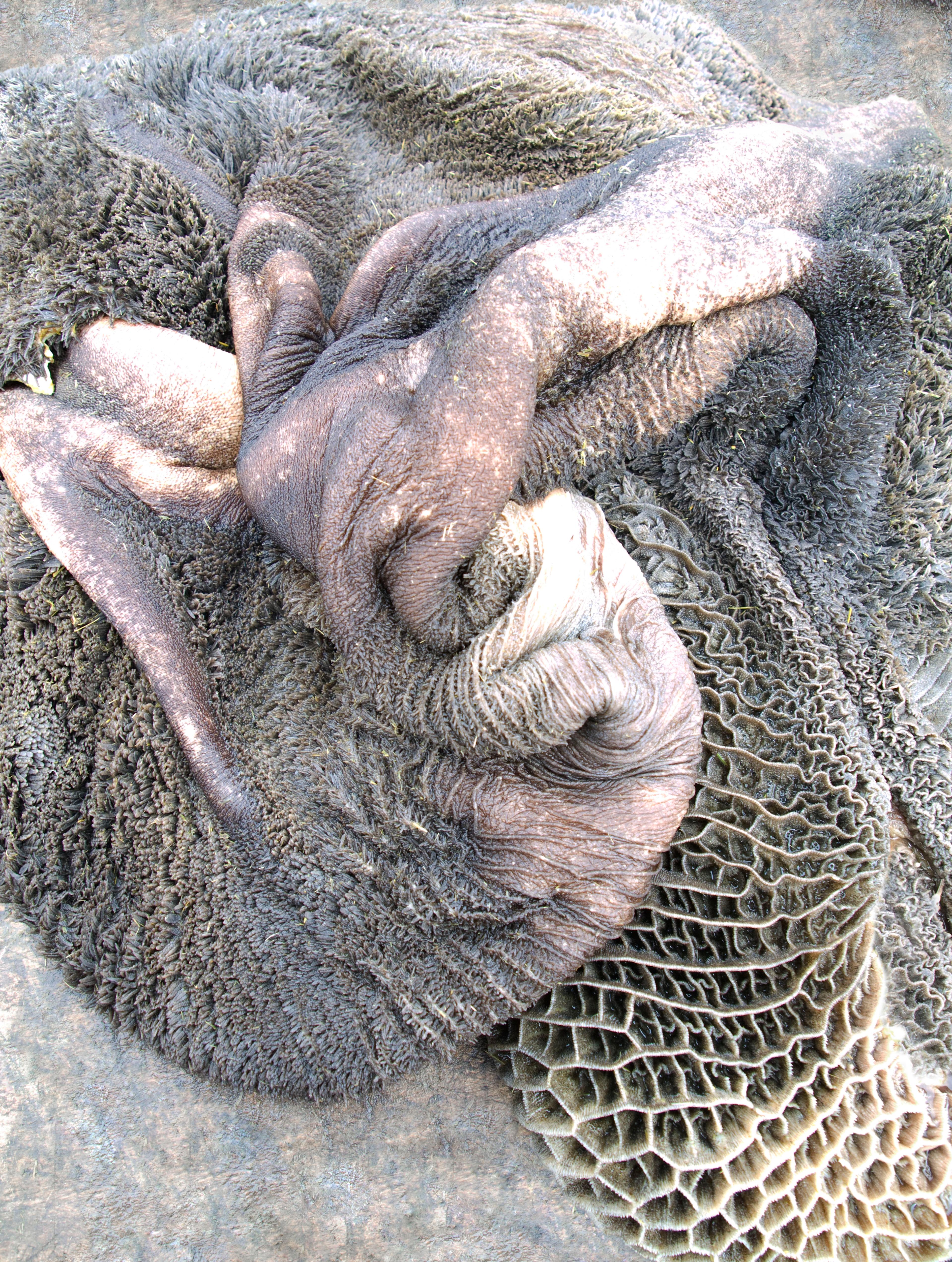
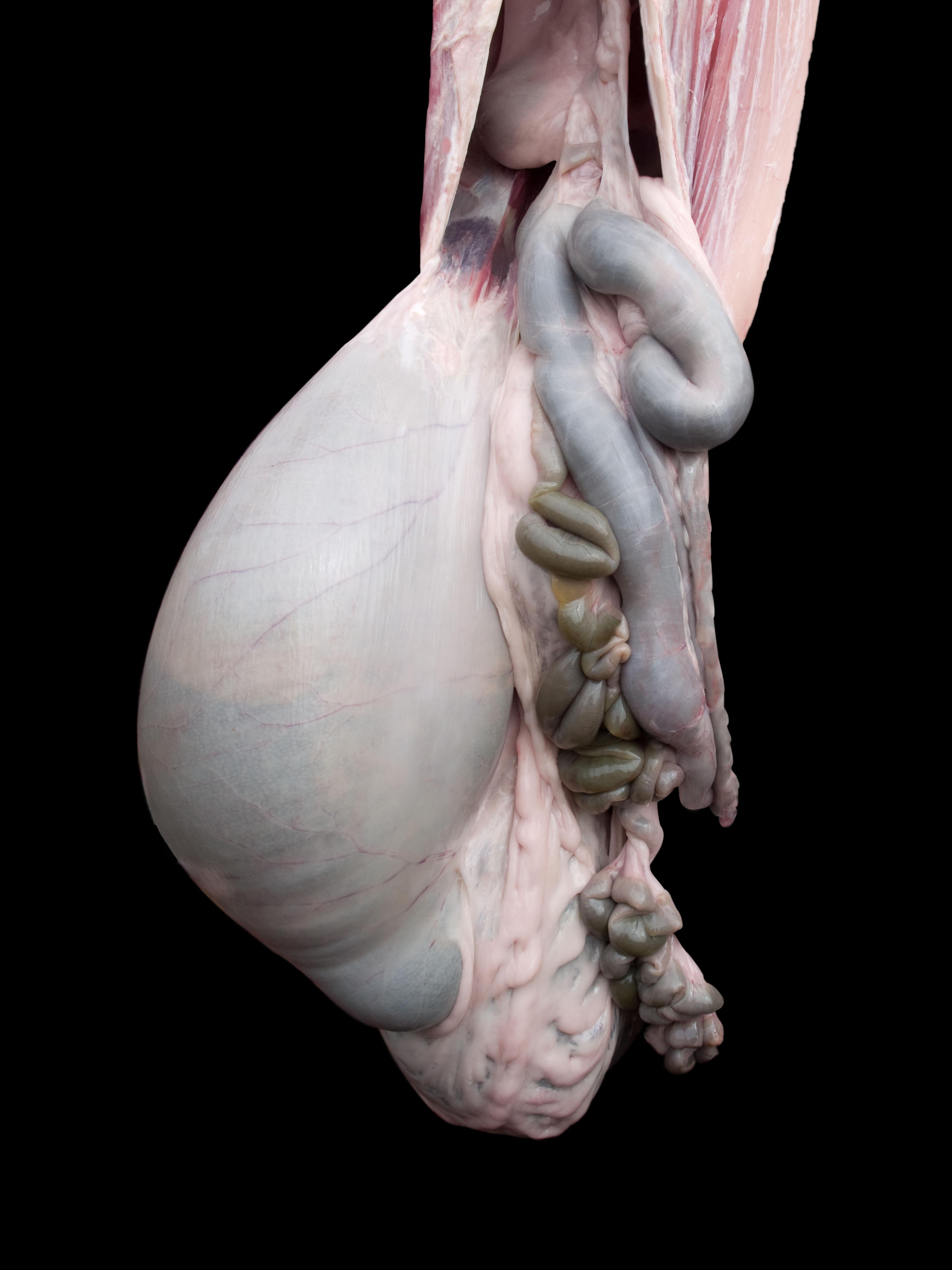
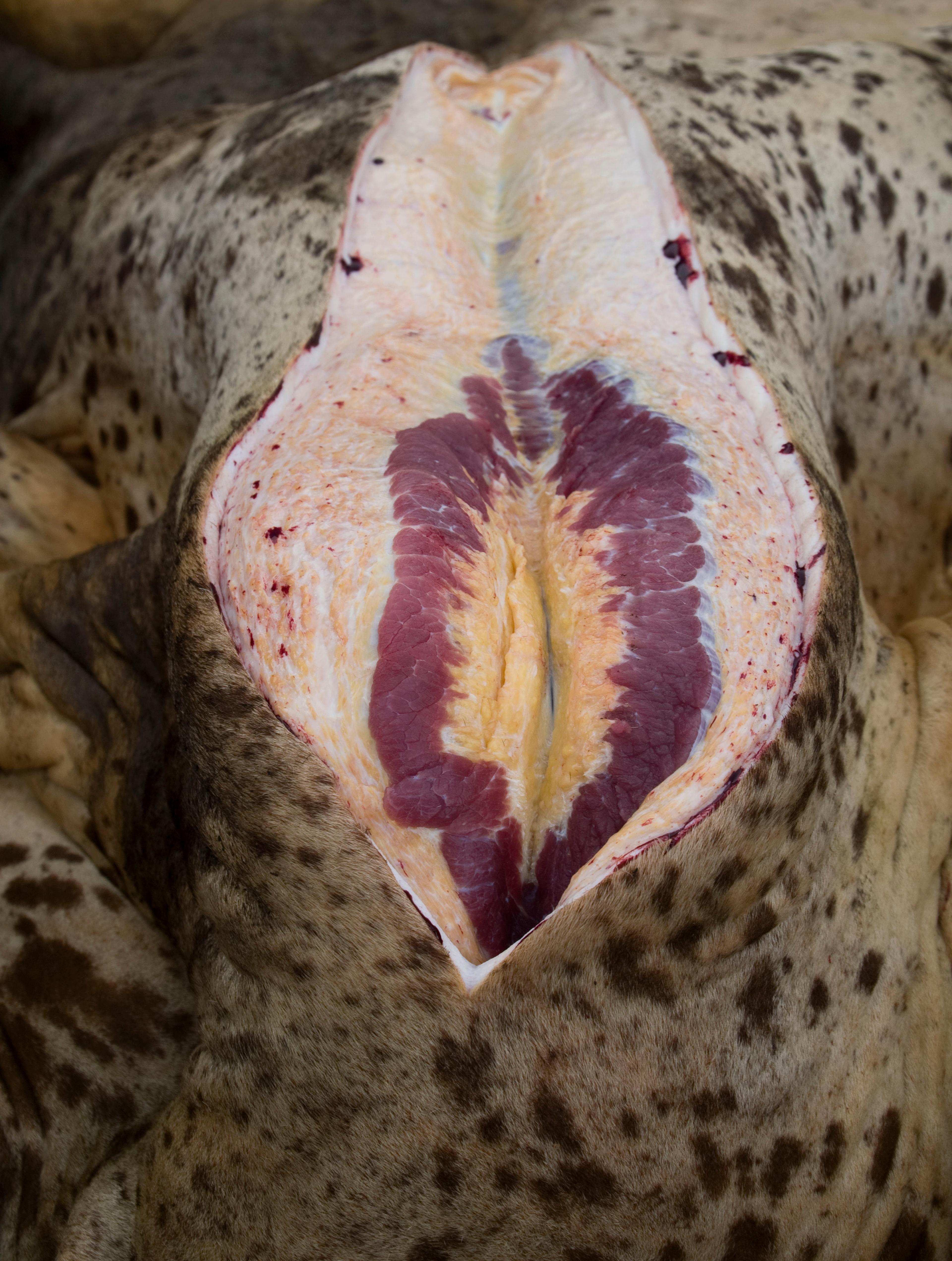
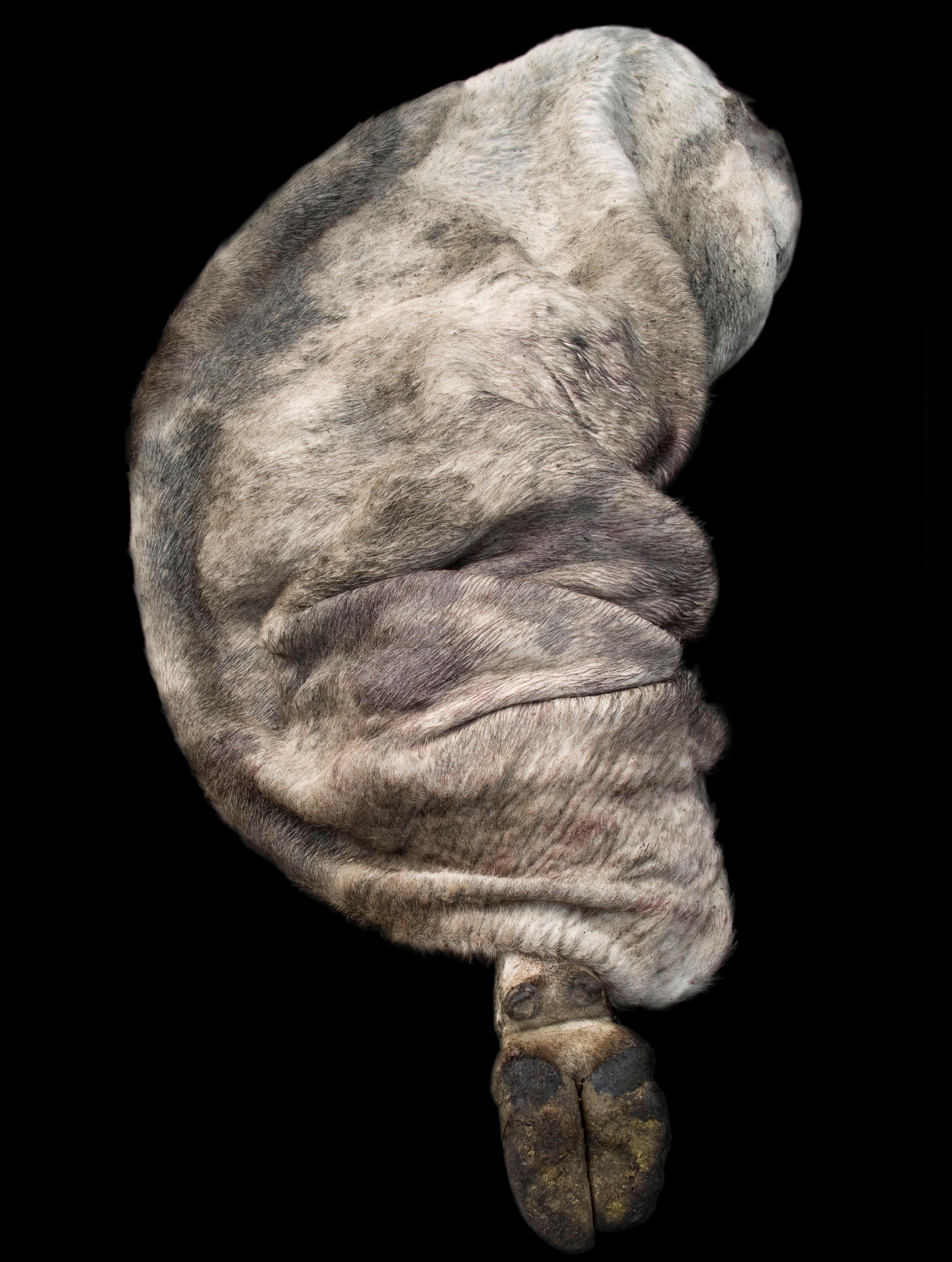
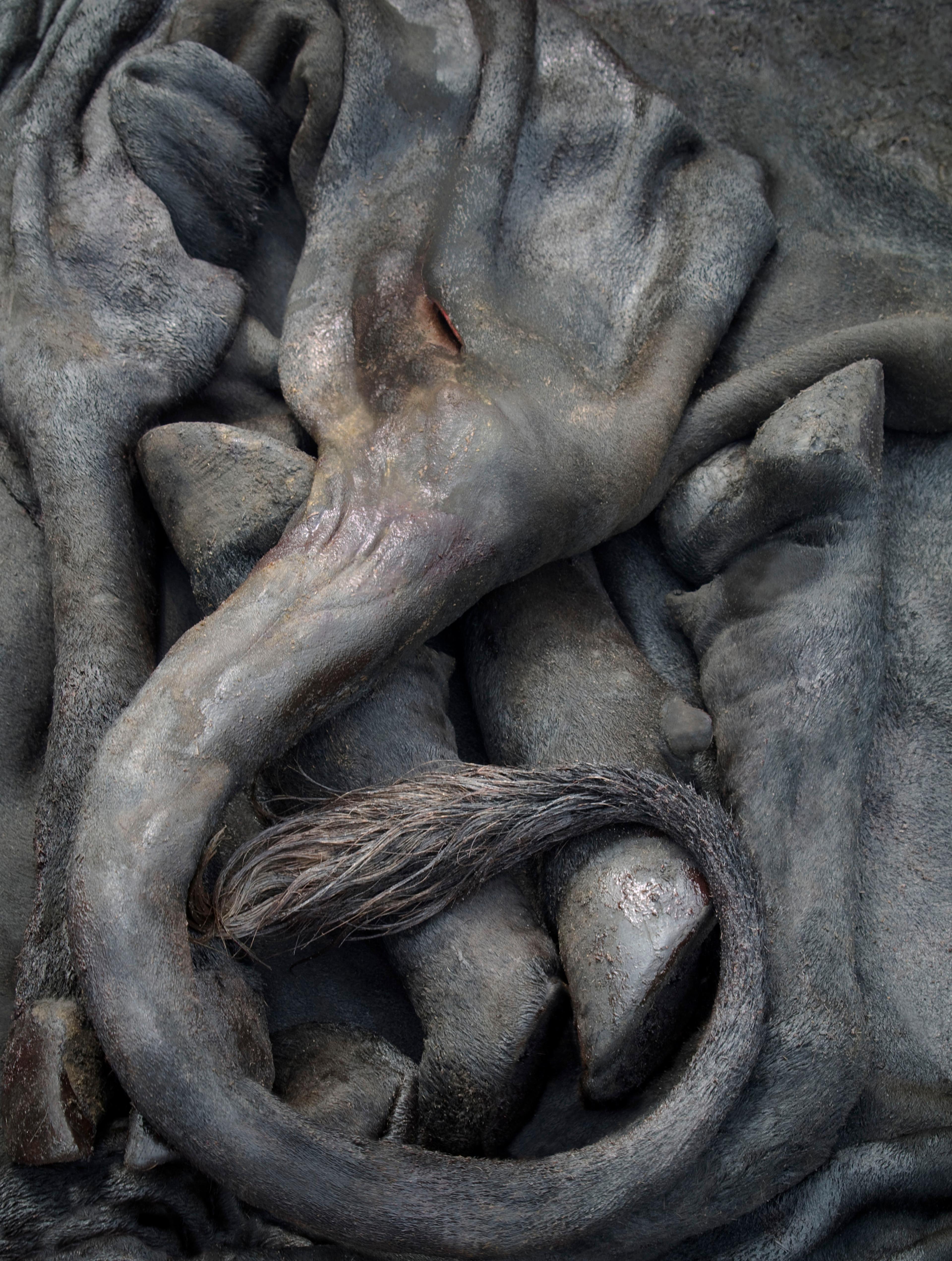
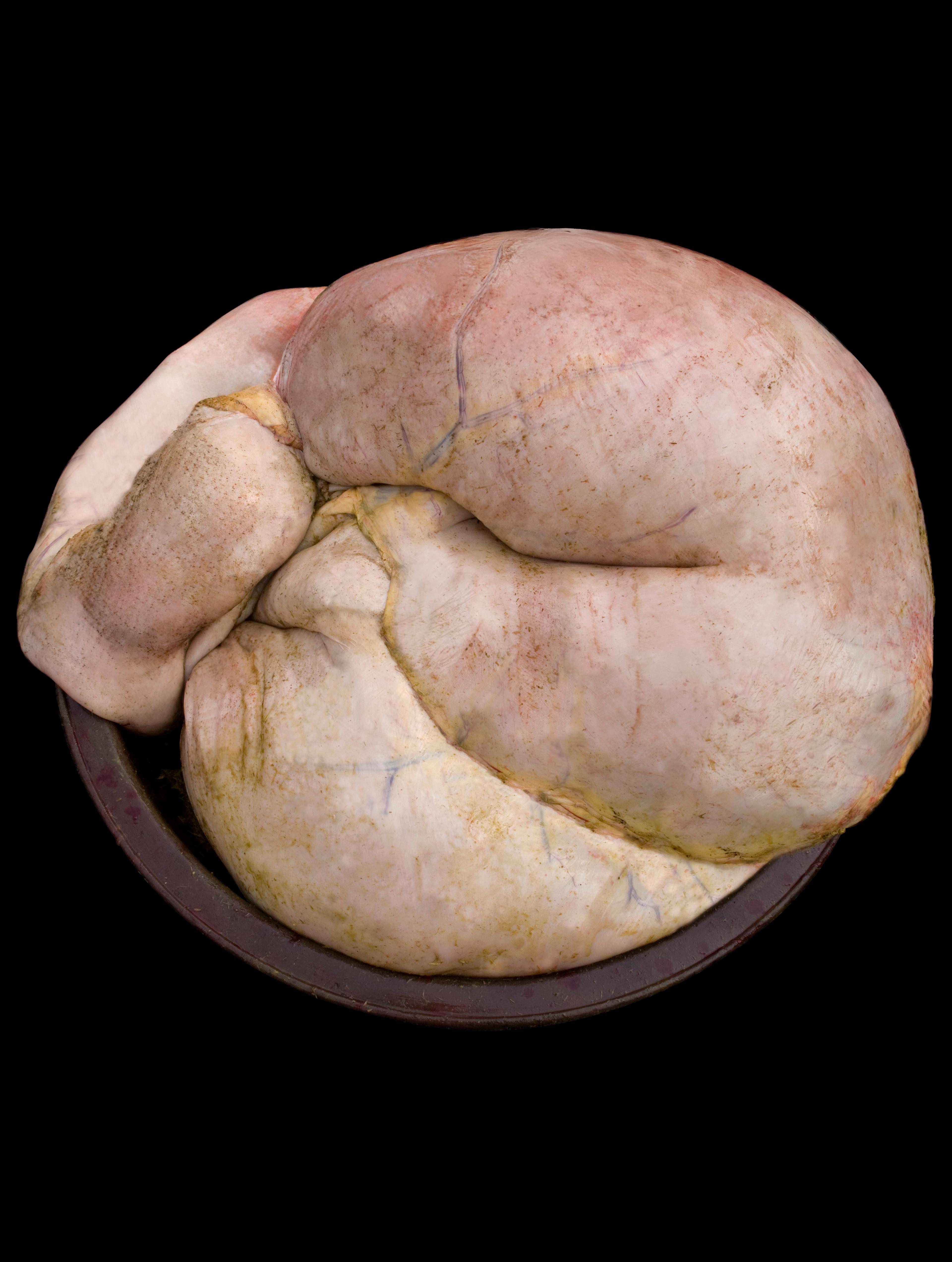
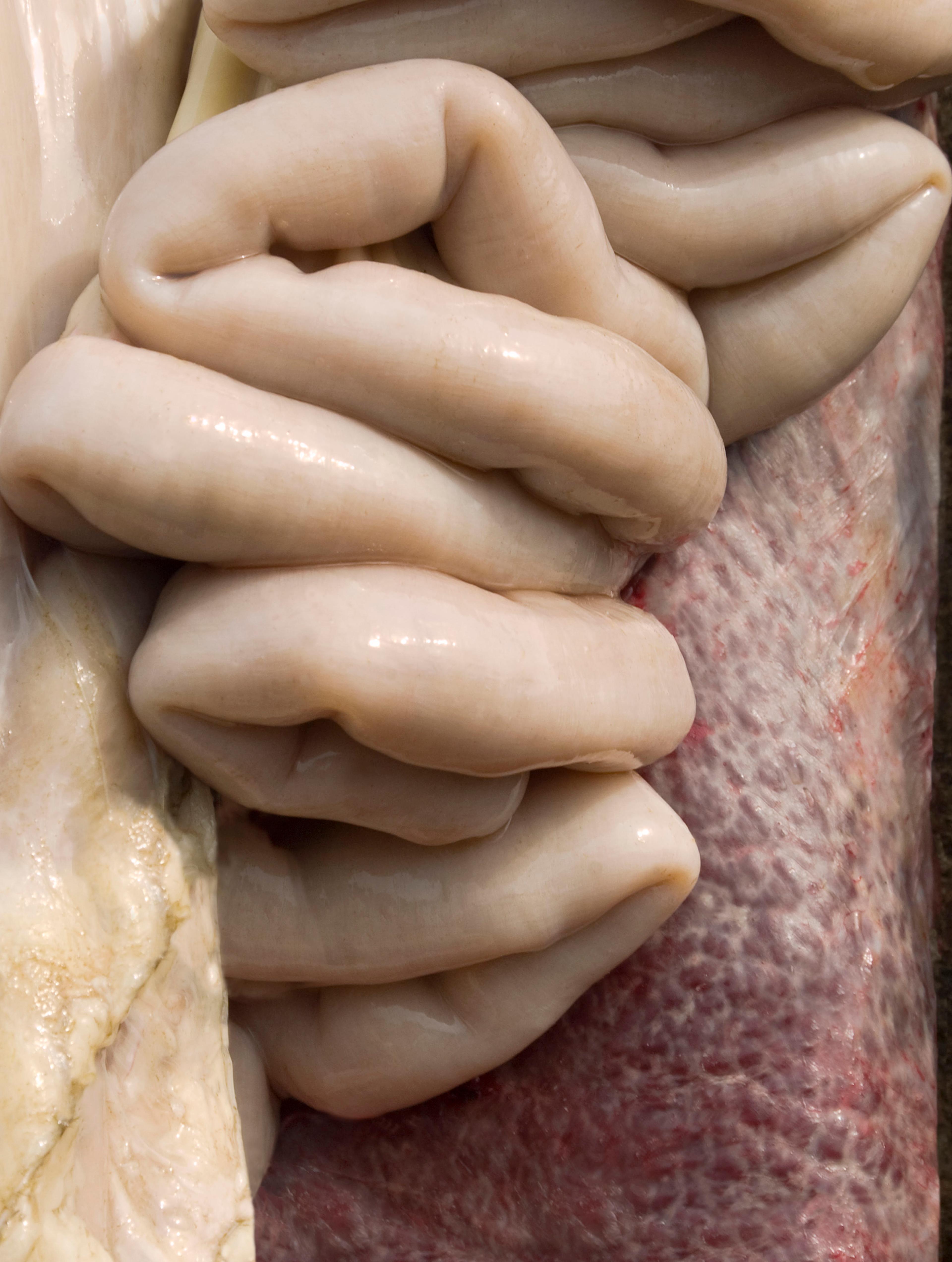
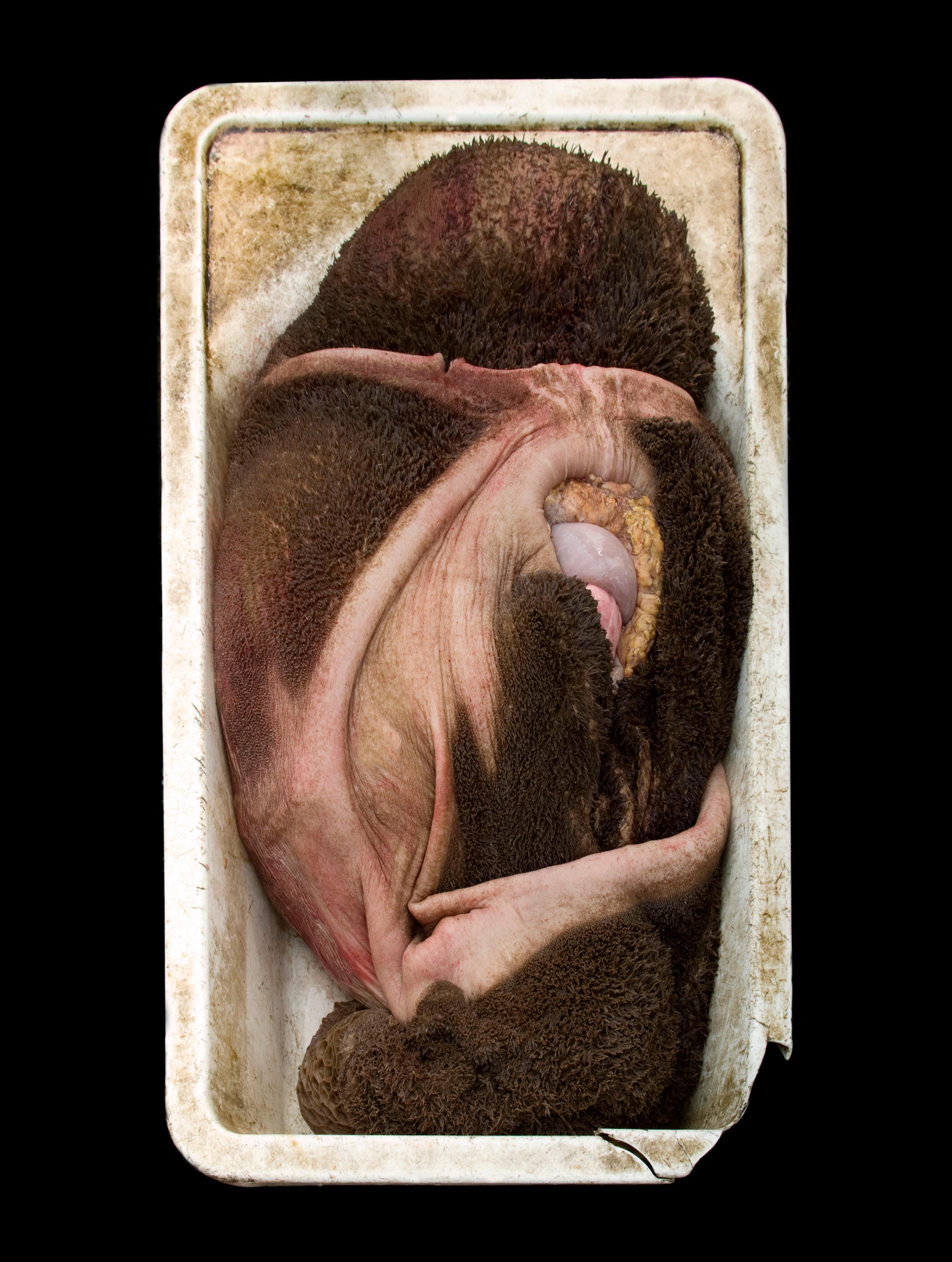
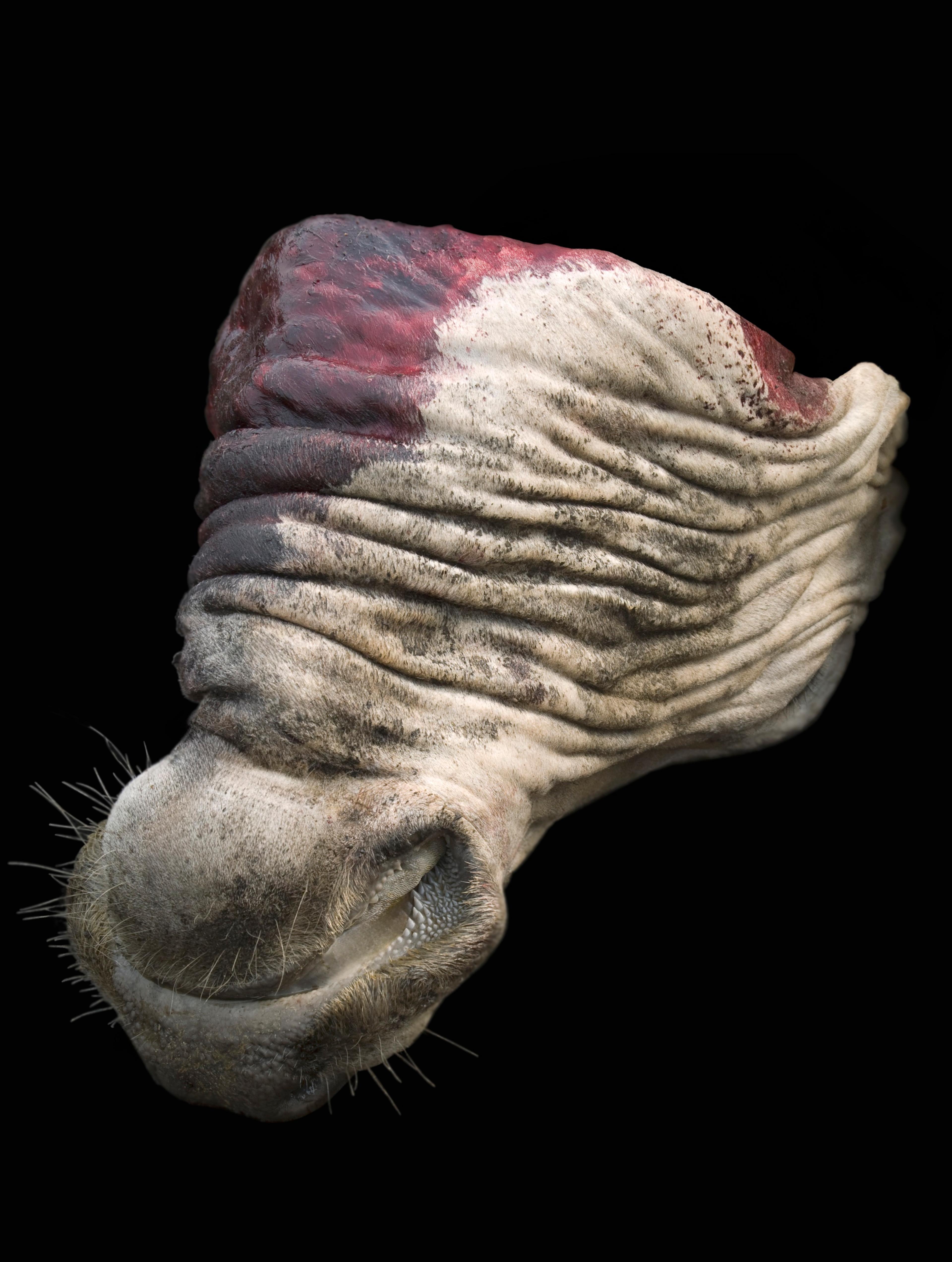
Hauser & Wirth is pleased to present Alex Van Gelder's first exhibition in London. Van Gelder's Meat Portraits is a series of visceral photographic studies of animal remains from a slaughterhouse in Benin, which upends traditional notions of portraiture.
Van Gelder photographs raw meat and entrails, either as he finds it in the marketplace, or after arranging it into contorted compositions, as if staged for a formal portrait. Sinewy ligaments are stretched against planes of taut, semi-transparent flesh, ripped, sagging muscles hang loosely and knuckles and faeces jut and spurt from between incisions in the animals' skin. Whereas portraiture delves into the soul of the sitter, Van Gelder's Meat Portraits literally delve inside their subjects, exposing the findings in an unrestrained portrayal of corporeality.
'African butchers don't use electric saws as Europeans do but cut up the meat by hand which produces a variety of styles. The slaughterhouse was in the open air and in front of it a small market where they would sell the still warm meat. I worked there on and off for one year producing my Meat Portraits. I consider these portraits still lives.'
– Alex Van Gelder
On first encounter, the Meat Portraits revolt and nauseate, but there is a strange beauty underlying their initial impact. Van Gelder is concerned with the transitory state between life and death and, although the series is named Meat Portraits, he considers these still-life works. This distinction highlights that the carnal remains in the Meat Portraits are now lifeless objects as opposed to living organisms. Bloodied and still pink, the redness of these objects acts as a sign of recent life. In this way, the Meat Portraits are reminiscent of the traditional African deathbed portraits that Van Gelder collects, where a photograph of the deceased is placed alongside their bed, around which the family gathers to pose for a photograph in a ritual to commemorate the passing of a loved one.
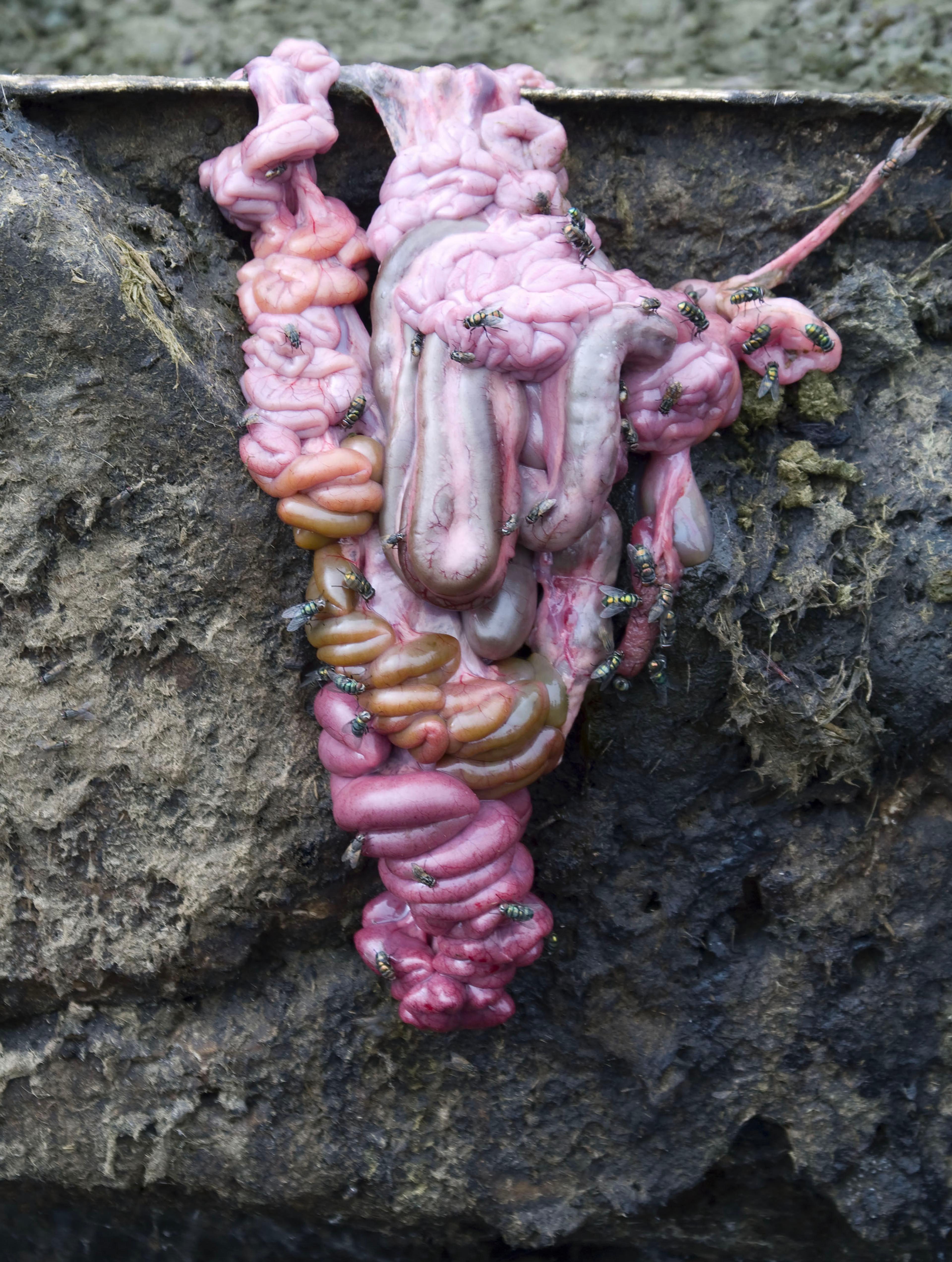
In 'Meat Portrait #010', innards drape sacrificially, bulging and engorged, from a metal shelf set against a rock face. A group of blue-green flies can be seen busily digesting the inanimate shining mass of colours and shapes, another sign of ongoing life amidst decay. Van Gelder's hulking slabs of meat are unceremoniously pictured on the floor, resting on a scrap of cardboard or a patch of dirty tarmac. In the more deliberate compositions, cracked and dirty basins create a frame for the ambiguous animal parts, with an impervious black surround, like a shroud, echoing the darkness of death.
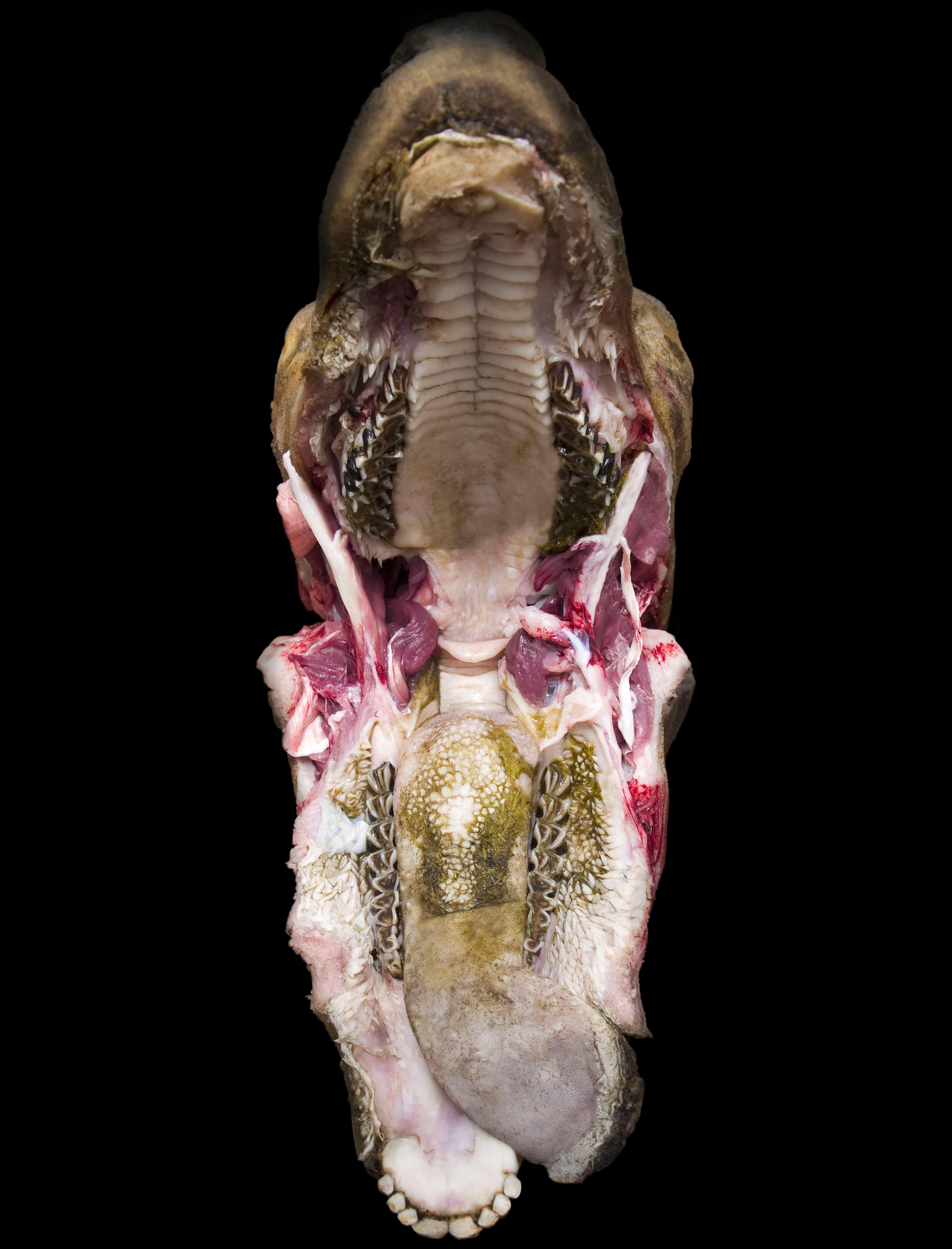
In a playful turn, within some of the portraits it is possible to discern a human profile or ghoulish face. In others, anatomical clues have been completely removed to create a distilled image. In 'Meat Portrait #037' Van Gelder depicts an assortment of offal laid haphazardly in a blood-stained bowl to give the impression of wet cloth, as if it were a basket of clean laundry waiting to be hung out to dry. Other compositions are more figurative and veer towards taxidermy, resembling anatomical studies that might be found in a surreal zoological museum. Equine jaws are prised open and meticulously presented for scientific study – though the cadaver is left unclean, with cavity-ridden teeth and bacteria and rancid debris still collected on its tongue.